
Table of Contents
ToggleUnderstanding the PCM Landscape
Phase-Change Memory (PCM) represents one of the most significant advancements in non-volatile memory technology, bridging the gap between the speed of DRAM and the persistence of flash storage. As we delve into the “Ekart PCM Deep Dive,” we explore the intricate architecture, operational principles, and diverse applications thata make PCM a cornerstone of modern computing systems.
The term “PCM” encompasses a broad spectrum of implementations—from memory controller interfaces and cache architectures to automotive engine control units and telecommunications applications. This comprehensive analysis examines PCM from multiple perspectives, providing a holistic understanding of its capabilities and limitations.
The Fundamental Architecture of PCM
Memory Cell Structure and Phase-Change Mechanism
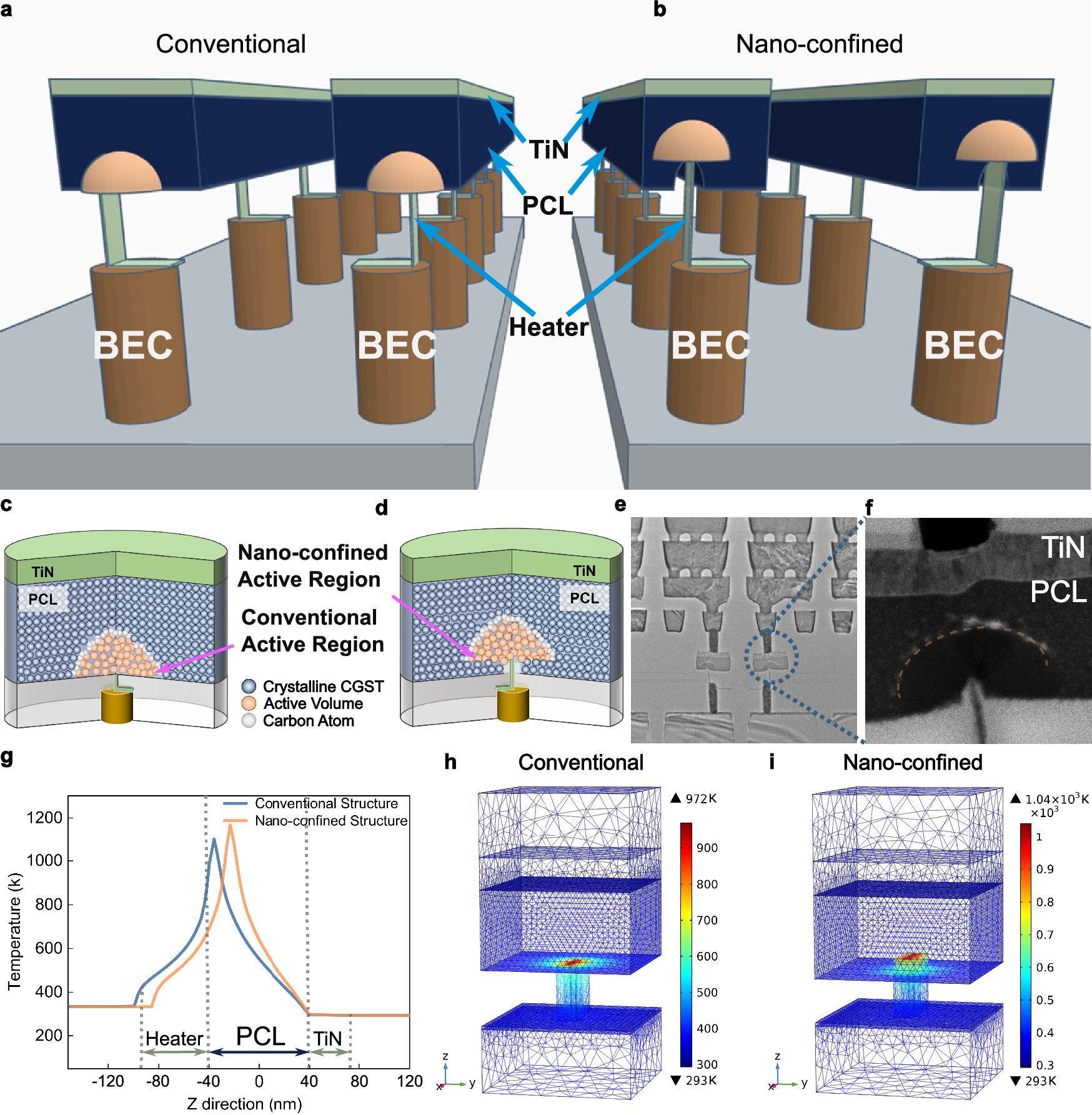
At its core, PCM relies on the unique properties of chalcogenide glass materials that can exist in two stable states—crystalline and amorphous. The transition between these states represents the fundamental mechanism for data storage. When heated to specific temperatures, the material either crystallizes (representing a “set” state) or becomes amorphous (representing a “reset” state), with each state exhibiting distinct electrical resistance characteristics that can be read as binary data.
This phase-change mechanism enables PCM to achieve impressive performance metrics. Unlike NAND flash, which requires block-erase cycles before write operations, PCM supports bit-level addressability with direct overwrite capabilities. This architectural advantage translates to significantly faster write performance and improved endurance.
Memory Array Organization
Modern PCM devices are organized into sophisticated hierarchical structures designed to optimize access times and power consumption. The memory array typically employs a bank-based architecture where the overall memory space is divided into multiple independently addressable banks. A patent document describes a configuration where a 1-megabit memory is arranged as 16 banks, each containing 64K bits . This division into smaller banks serves a crucial purpose: improving performance by enabling independent operations across banks.
The bank architecture is particularly important given PCM’s asymmetric read-write characteristics. Write operations to PCM cells require more time than read operations due to the heating and cooling cycles necessary for phase changes. By distributing memory across multiple banks, operations can occur concurrently, effectively masking the latency of slower write operations.
Cache Integration and Performance Optimization
The LUT-Based Caching Architecture
One of the most innovative aspects of PCM architecture is its integration with lookup table (LUT) caching mechanisms. A patent describes a sophisticated caching system where a small SRAM-based LUT acts as a cache for the larger PCM array . This hierarchical approach addresses one of PCM’s fundamental challenges: while the technology offers faster access than traditional storage, it still cannot match the speed of SRAM.
The LUT operates alongside the PCM banks, storing frequently accessed data for rapid retrieval. When a read request arrives, the system first checks the LUT for a cache hit. If the data is present, it can be delivered almost immediately, bypassing the slower PCM bank access. On a miss, the data must be retrieved from the main PCM array, and the LUT is updated accordingly.
The caching mechanism supports both write-through and write-back configurations. In write-through mode, all write operations are forwarded to both the LUT and the main PCM array, ensuring data consistency but potentially reducing performance. Write-back mode offers improved performance by initially storing write data only in the LUT, deferring the slower PCM write until the cache line is evicted .
Interleaved Bank Architecture for Enhanced Throughput
Performance optimization extends beyond simple caching. PCM devices employ interleaved bank architectures that significantly improve throughput. The bank interleaving approach divides memory into multiple banks, each with its own write latch for data storage during the slow write process .
This design enables a powerful performance optimization: while one bank is performing a slow write operation, other banks can continue processing read requests or initiating their own write sequences. The latency of the write operation becomes hidden behind concurrent activity, effectively increasing the overall system throughput.
A patent document describes how data can be stored locally within each bank’s write latch, allowing the slow set-write process to occur concurrently with data transfers to other banks . This approach demonstrates how careful architectural design can mitigate PCM’s inherent performance limitations.
Page-Mode Access and Command Processing
PCM devices support sophisticated page-mode access that further enhances performance. The page-mode caching architecture implements a flexible command set supporting operations including block moves, burst-mode reads and writes, and ECC-protected transfers .
The page-mode architecture integrates multiple buffering levels—including read line buffers, write line buffers, and multi-line page buffers—to optimize data movement. This buffering hierarchy enables efficient handling of the relatively slow write operations while maintaining high read performance.
The PCM Chip Interface: Bridging the System Gap
Microprocessor Compatibility and Bus Architecture
The PCM interface presents a well-defined architecture for communication with host processors. A detailed datasheet for a PCM component describes an interface designed for compatibility with multiplexed address/data bus designs, specifically targeting the Intel 80186 microprocessor .
The PCM appears to the microprocessor as a contiguous address space of 256 bytes, with the 8-bit address supplied through multiplexed address/data pins. This arrangement simplifies integration into existing system designs, requiring minimal external logic for implementation.
The interface supports both memory-mapped and I/O-mapped access, providing flexibility for system designers. The PCM’s chip select signal, derived from address decoding above bit A07, controls when the device responds to bus cycles, ensuring it only processes intended accesses.
Resource Arbitration and Ready Signal Management
A crucial aspect of PCM interface design involves resource arbitration and ready signal management. The PCM controls access to four distinct resources: internal registers, buffer memory, and two peripheral channels (Channel A and Channel B) . Access to these resources requires careful management to handle contention.
The PCM implements two primary approaches to resource access management. In the first approach, when the microprocessor supports the READY/WAIT function, the PCM uses the RDY signal to hold the microprocessor in a wait state if the requested resource is not immediately available. This approach simplifies firmware design by ensuring synchronous, predictable access.
The second approach accommodates systems that do not support the RDY function. In this scenario, the microprocessor initiates an access and continues executing code while the PCM asynchronously completes the operation. The firmware assumes responsibility for polling status bits or monitoring the RDY signal to determine when the access has completed and data is available .
The latency associated with buffer accesses is determined by the equation: TBRST = 2(N) + 4(P+1) expressed in PCM clocks, where N equals the number of bytes in the port’s burst and P equals the number of page boundaries crossed during the burst . For a typical burst of 22 bytes crossing a page boundary at 16MHz, the total time would be 52 PCM clocks, representing approximately 3.25 microseconds.
Clock Generation and Phase Management
Advanced PCM implementations incorporate sophisticated clock generation and phase management capabilities. A patent describes a PCM design with programmable clock multiplication, allowing the generation of output clocks at multiples of the input frequency .
The clock multiplication is achieved through a phase-locked loop (PLL) configuration with programmable dividers DIV0, DIV1, and DIV2. In ExpressCLK feedback mode, the output frequency is determined by F_ExpressCLK_OUT = F_INPUT_CLOCK * DIV1 / DIV0 . With divider values ranging from 1 to 8, the multiplication range spans from 1/2 to 8 times the input frequency, with the system clock potentially operating up to 8 times the ExpressCLK frequency.
This capability enables high-speed internal processing while maintaining slower off-chip interface speeds. The patent describes a scenario where a 10MHz input clock is multiplied to produce a 25MHz I/O interface while the internal system clock operates at 50MHz, demonstrating how PCM supports high-performance computing while managing power and signal integrity constraints.
PCM in Automotive Applications
Engine Control Units and Load Management
PCM technology finds significant application in automotive engine control units (ECUs), where the acronym takes on additional meaning—Powertrain Control Module. In this context, PCM integrates sophisticated load driving capabilities with diagnostic functionality.
A patent document describes an output interface design where loads such as injectors, ignition coils, and transmission solenoids are controlled through N-channel FET low-side drivers . The design enables comprehensive diagnostic capabilities through state detection signals that monitor the voltage on the drain side of the FET.
The state detection system can identify various fault conditions based on the combination of load driving signals and monitored voltages. For a low-side driver configuration, the detection signal values follow predictable patterns for normal operation versus various fault states: open-load, short-circuit, and ground faults .
This diagnostic capability extends to high-side drivers used for loads like air conditioner compressor clutches, where P-channel FETs connect the load to the power supply. The state detection monitors the source voltage, enabling identification of similar fault conditions.
Communication and Distributed Control
Modern automotive PCM implementations embrace distributed control architectures with extensive communication capabilities. The PCM communicates with other vehicle control units—including the Body Control Module (BCM), Instrument Panel Module (IPM), and Rear Integration Module (RIM)—through multiplex communication networks .
This distributed architecture enables significant wiring reduction. The patent describes how signals for various vehicle functions, including exhaust gas temperature alarm lamps, engine alarm lamps, and defogger switches, are transferred through multiplex communication rather than dedicated wiring. This approach reduces vehicle weight, improves reliability, and simplifies manufacturing.
The PCM participates in a sophisticated control flow that extends beyond the ignition cycle. When the ignition key is turned off, the PCM enters an ending processing phase where backup data transfer occurs. Data necessary for system restoration is transmitted to the BCM for storage, ensuring seamless recovery when the vehicle is restarted .
During initialization after power-up, the PCM requests backup data from the BCM. If the backup data is determined to be normal, it is loaded as the initial configuration. If corruption is detected or the BCM is non-functional, the PCM falls back to default ROM data . This approach ensures system resilience while preserving user preferences and learned parameters.
PCM in Telecommunications Applications
Audio Interface and Codec Integration
In telecommunications and embedded systems, PCM interfaces serve as the primary connection point for audio processing. A Quectel module application note describes PCM implementation with the TLV320AIC3104 audio codec, providing both master and slave mode operation .
The PCM interface supports multiple configuration options, including 8-bit a-law and μ-law formats, as well as 16-bit linear data formats. The clock frequency options range from 128KHz to 2048KHz, with frame synchronization typically set at 8KHz . This flexibility enables adaptation to various audio quality requirements and system constraints.
Master mode configuration places the PCM module in control of the clock and synchronization signals. In this mode, data is sampled on the falling edge of PCM_CLK and transmitted on the rising edge, with PCM_SYNC falling edge representing the most significant bit . Slave mode operation accommodates systems where an external master provides the timing signals.
Signal Integrity and Level Translation
The PCM implementation in telecommunications applications requires careful attention to signal integrity and voltage level compatibility. The application note recommends an RC filter circuit (R=22Ω, C=22pF) on the PCM_CLK line to manage signal quality and reduce electromagnetic interference .
Voltage level translation presents another critical consideration. While the modules provide a 1.8V PCM interface, many applications operate at 3.3V. The recommended solution uses the Texas Instruments TXS0104 level translator to bridge the voltage difference while maintaining signal integrity .
Advanced PCM Features and Timing Considerations
Multi-Bank Access and Command Processing
Advanced PCM implementations support sophisticated multi-bank access patterns that maximize performance. A patent describes the timing and signaling for read and write operations across one or two banks simultaneously .
For two-bank reads, the memory controller transfers both bank addresses and line addresses before activating the request signal. The PCM device then retrieves data from both banks, driving the acknowledgement line inactive during the read operation. Once data is ready, the acknowledgement line is activated, and data from both banks is transferred sequentially .
The same multi-bank capability extends to write operations. For two-bank writes, the memory controller transfers the command, addresses, and data for both banks before asserting the request signal. The PCM processes both writes, acknowledging completion once the data has been stored, either in the LUT cache (for faster operation) or in the PCM banks themselves .
Error Correction and Data Integrity
PCM implementations incorporate robust error correction capabilities to address the reliability challenges inherent in phase-change technology. The page-mode caching architecture includes ECC (Error Correction Code) support that generates parity bits for data stored in the LUT and verifies data retrieved from PCM banks .
The ECC controller can generate ECC bytes for host data being stored in the LUT, and can check data fetched from PCM banks for errors, correcting any errors when the fetched data is being written into the LUT . This protection is essential given the stress-induced wear characteristics of phase-change materials and the potential for data degradation over time.
Power Management and Testability
Advanced PCM implementations include comprehensive power management features. A patent describes programmable enable/disable capability, where setting bit 0 of Register 7 turns off the analog power supply of the PCM when disabled, conserving power and eliminating noise injection into the system power buses .
Testability is also a key consideration, with PCM devices incorporating sophisticated test modes and diagnostic capabilities. A datasheet describes the Test Address and Status register that provides visibility into internal device functioning by allowing selection of internal registers, counters, and state machine states for display .
The test mode sequence includes specific steps to prevent accidental activation, including writing 80H to the test register, followed by a write to the Reset and Test register with the selected test mode, and finally writing F0H to the test register . This interlock mechanism ensures test modes are only invoked intentionally.
Conclusion: The Future of PCM Architecture
The comprehensive analysis presented in this “Ekart PCM Deep Dive” reveals PCM as a versatile and sophisticated technology with applications spanning consumer electronics, automotive systems, and telecommunications infrastructure. The architectural principles that define PCM—including bank-based memory organization, LUT caching for performance optimization, and advanced interface capabilities—represent the cumulative insight of decades of memory technology development.
PCM’s ability to bridge the performance gap between volatile and non-volatile memory positions it as a critical technology for future computing systems. The cache integration techniques, interleaved bank architectures, and clock management capabilities described in these technical documents demonstrate how PCM addresses the fundamental challenges of phase-change memory while leveraging its unique advantages.
As memory requirements continue evolving toward higher capacity, lower latency, and improved endurance, PCM technology and its architectural innovations will likely play an increasingly important role. The principles of PCM architecture—bank interleaving, hierarchical caching, and advanced interface design—provide a foundation for future memory technologies that will continue pushing the boundaries of system performance.
The automotive applications of PCM, particularly in engine control and distributed vehicle systems, underscore the technology’s reliability and suitability for demanding environments. The telecommunications implementations demonstrate PCM’s flexibility in supporting real-time audio processing and embedded systems.
As we look toward future innovations, PCM architecture will continue evolving, building on the solid foundation established by the designs and implementations discussed in this analysis. The ongoing development of phase-change materials, the refinement of memory cell structures, and the improvement of interface capabilities promise continued advances in PCM performance and applicability across the computing landscape.
