
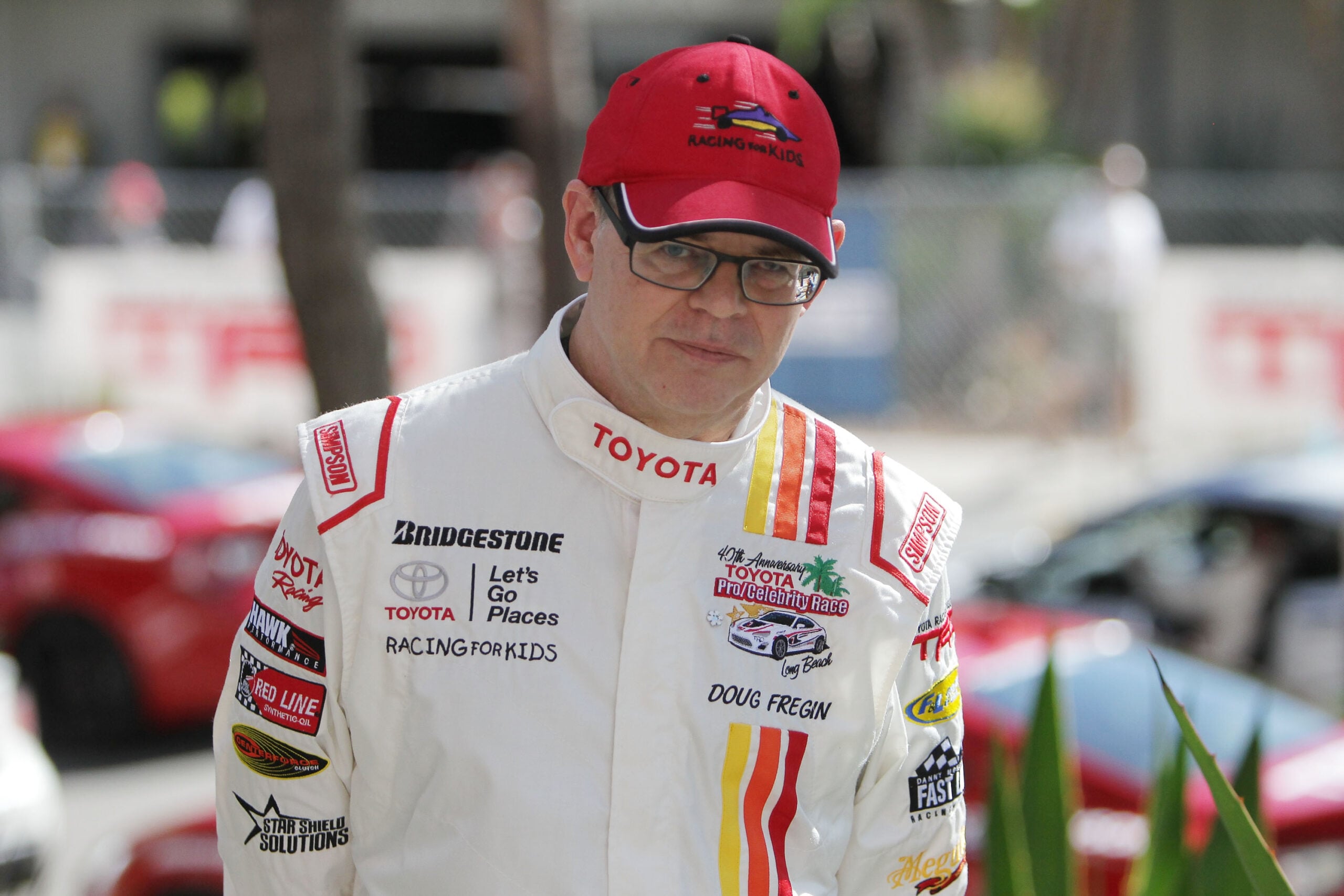
The Silent Billionaire: How Douglas Fregin Cashed Out of BlackBerry at the Perfect Time In the pantheon of tech founders, we are used to a specific archetype. We expect the Steve Jobs-like visionary who returns to save a dying company, or the Mark Zuckerberg-esque mogul who clings to the helm with an iron grip, watching their stock price fluctuate with every quarterly report.
Table of Contents
ToggleThen there is Douglas Fregin.
If you watched the 2023 film BlackBerry, you saw a fictionalized version of him—played by the film’s director Matt Johnson—as an eccentric, hoodie-wearing, music-blasting engineer who cared more about the “wizardry” of the circuit board than the stock price. In reality, Fregin might be one of the savviest financial minds of his generation, not because of the fortune he built, but because of the fortune he kept.
As of 2026, Douglas Fregin’s net worth is estimated to be approximately $1 billion. While that number is staggering, the more interesting metric is the story of how he got there. Unlike his former partners who stayed on the sinking ship, Fregin executed a flawless exit strategy that allowed him to watch the collapse of the smartphone empire he built from the safety of a private island—metaphorically speaking.
This is the story of the quiet Canadian co-founder of BlackBerry, his rise to $2 billion, his timely retreat, and his current life as a quantum computing evangelist.
The Basement Days: Friendship as a Foundation
To understand Fregin’s net worth, you first have to understand his relationship with money and fame. Born in Windsor, Ontario, in 1960, Fregin was the classic “radio kid.” He met Mike Lazaridis in elementary school, and the two bonded over a shared curiosity for electronics that went far beyond their grade level.
While most entrepreneurs look for market gaps, Fregin and Lazaridis looked for problems to solve. In 1984, they founded Research In Motion (RIM). It wasn’t a grand vision to conquer the world of telephony; it was a $15,000 bet financed by an Ontario New Ventures loan. They set up shop in a small office above a pizza shop in Waterloo, Ontario.
Fregin’s role was crucial. While Lazaridis often took the public role of the genius, Fregin was the operational and technical backbone. He designed the initial circuit boards that powered the company’s early wireless technology. He was the Vice President of Operations, the guy who ensured that the hardware could actually do what the software promised.
For nearly two decades, he was the “other RIM guy.” He wasn’t interested in the limousines or the press conferences. He was interested in the DigiSync film reader—a device developed by RIM that revolutionized film editing and earned him an Emmy Award in 1994. This technical focus kept him grounded while the world went mobile.
The 5% Rule: Building the Billion-Dollar Stake
The real story of Douglas Fregin’s net worth begins on the trading floor. In 1997, when RIM went public, Fregin held approximately 5% of the company. At the time of the IPO, that stake was valued at roughly $23.6 million. Not bad for a couple of kids from Windsor.
But the magic of the tech boom was just beginning. The launch of the BlackBerry in 1999 changed everything. The device was revolutionary—a “CrackBerry” that allowed lawyers, CEOs, and presidents to email each other from the palm of their hand.
As the 2000s progressed, RIM’s valuation skyrocketed. By 2005, Fregin’s ownership had been diluted slightly to about 2.7%, but the value of that stake had exploded to $396 million.
This period represents the peak of Fregin’s earning power. At the height of BlackBerry’s dominance in 2008—when the company was worth approximately $85 billion—Fregin’s net worth peaked at an estimated $2 billion. He was one of the richest people in Canada, yet he remained largely invisible to the public eye.
The Genius Exit: Retiring in 2007
Here is where Douglas Fregin separates himself from the tragic narratives of tech history.
In May 2007, just weeks before the original iPhone was released to the public, Douglas Fregin retired.
He resigned as Vice President of Operations. He walked away from the boardroom. At the time, the company was still printing money. The BlackBerry Curve and the Pearl were selling millions of units. Most observers thought he was simply a wealthy man taking an early break.
But history suggests Fregin saw the iceberg before the band started playing. When he left, he held a 2% stake in RIM. Unlike many executives who hold stock options that are locked up or who refuse to sell because they believe in the “vision,” Fregin liquidated.
By the time he retired, his 2% stake was valued at approximately $1.3 billion. He took the money and ran.
This timing is arguably the greatest “market timing” event in tech history. After 2007, the iPhone ate BlackBerry’s lunch. Android emerged. By 2013, BlackBerry’s market cap had collapsed by over 90%. Fregin had already cashed out, preserving his billionaire status while the company crumbled around his former colleagues.
The $1 Billion Floor: How He Stays Rich
You might ask: if he retired in 2007 and hasn’t worked a “regular job” since, why is his net worth still estimated at $1 billion in 2026? Shouldn’t he have spent it?
The answer lies in the “Dry Powder” principle. Douglas Fregin didn’t just sell stock and put it in a checking account. He took his billions and diversified.
In 2013, he reunited with Mike Lazaridis to co-found Quantum Valley Investments. The fund started with a commitment of $100 million of their own money. The goal? To turn Waterloo, Ontario, into a hub for quantum computing—a field so complex that it makes smartphone engineering look like Lego building.
While the general public has never heard of most of their portfolio companies, the value of early-stage quantum computing patents and research is astronomical. Fregin isn’t trying to build the next iPhone; he is trying to build the computer that will render current encryption obsolete.
Furthermore, Fregin made smart real estate plays. Notably, his firm Quantum Valley Investments purchased a BlackBerry building for $15 million in 2014, a testament to his willingness to buy the physical assets of his old company at a steep discount.
He also holds a diverse portfolio of philanthropic investments. He donated $10 million to help found the Perimeter Institute for Theoretical Physics. He was awarded the Order of Canada in 2016 and an Honorary Doctorate from the University of Waterloo in 2022. These aren’t just plaques on the wall; they represent his engagement with the scientific community, which keeps him at the forefront of innovation—and keeps his value high.
Comparison: Fregin vs. The Other Founders
To truly appreciate Fregin’s financial acumen, you have to look at the wreckage left behind by others.
Jim Balsillie, the co-CEO who joined later and became the aggressive face of BlackBerry, saw his net worth evaporate from the billions to an estimated $50–100 million range as he bought a hockey team and watched the stock tank. Mike Lazaridis, the visionary, stayed on until 2012 and saw his $3.8 billion peak fortune slashed significantly, though he remains a billionaire today due to similar diversification efforts.
Fregin, however, never got greedy. He didn’t need to be the king. He was happy to be the wizard in the tower. By leaving in 2007, he avoided the “dead money” years where RIM stock essentially became worthless.
| Founder | Peak Net Worth (Est.) | Exit Strategy | Current Status |
|---|---|---|---|
| Douglas Fregin | $2 Billion | Retired in 2007; sold majority stake | ~$1 Billion (Preserved) |
| Mike Lazaridis | $3.8 Billion | Stayed until 2012; value eroded | ~$1 Billion (Recovered via VC) |
| Jim Balsillie | $2.5 Billion | Forced out in 2012; stock collapse | ~$100 Million (Significant loss) |
Source: Analysis of market cap data and public reporting .
The “BlackBerry” Movie Effect
In 2023, the movie BlackBerry brought Fregin back into the pop culture spotlight. The film portrayed him as eccentric, playing drums in the office, and using a whiteboard to track “Wizard vs. Suits” dynamics.
While the film took creative liberties, it solidified his legacy as the “cool founder.” Interestingly, the buzz around the movie introduced a new generation to Fregin, but it didn’t change his behavior. He gave almost no interviews. He let the movie speak for itself.
This reclusiveness is part of his brand. Because he isn’t burning cash on yachts or private islands (publicly, at least), the estimate of his net worth remains stable. He doesn’t make “stupid money” bets on meme stocks or crypto exchanges. He invests in physics.
Where Does He Go From Here?
As of 2026, Douglas Fregin is in his mid-60s. His net worth is expected to remain stable or grow moderately based on the success of Quantum Valley Investments.
The quantum computing sector is currently in a “Netscape moment”—pre-revenue but high hype. If Quantum Valley Investments successfully backs a company that solves quantum decoherence, Fregin’s $1 billion net worth could double or triple overnight, potentially surpassing his BlackBerry-era peak.
However, that isn’t likely his goal. Fregin has proven that money is a byproduct of good engineering for him, not the end goal.
The Ultimate Takeaway
Douglas Fregin’s net worth narrative teaches us a lesson that most Silicon Valley bros refuse to learn: Sometimes, the winning move is to walk away.
He didn’t have the ego to fight Steve Jobs. He didn’t have the desire to pivot the company into software. He saw the wave, rode it to the absolute peak, and then paddled back to shore while everyone else tried to catch a wave that had already broken.
Today, he is worth $1 billion, works on quantum physics, and enjoys his privacy. In an era of billionaire influencers fighting on social media, Douglas Fregin remains the silent billionaire—and arguably the happiest one.
Key Statistics at a Glance
-
Current Net Worth: $1 Billion (2026 est.)
-
Peak Net Worth: $2 Billion (2008)
-
IPO Stake (1997): 5% ($23.6 million)
-
Retirement Stake (2007): 2% ($1.3 billion)
-
Known For: Co-founding BlackBerry (RIM), Quantum Computing VC
-
Awards: Emmy Award, Order of Canada, Honorary Doctorate
